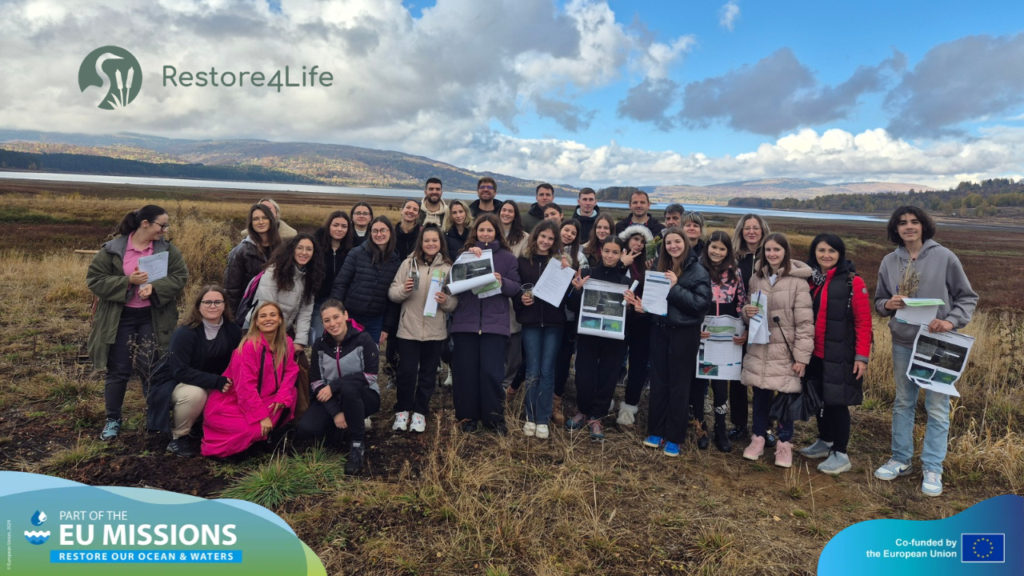
55 Students and Teachers Explore Wetland Restoration at the IS3 Vlasina wetland implementation site, Serbia.
55 Students and Teachers Explore Wetland Restoration at the IS3 Vlasina wetland implementation site, Serbia.
Healthy wetlands act as nature’s own water filters, carbon sinks, and flood buffers. Yet for many young people and local communities, the vital services these ecosystems provide often remain hidden beneath the surface. On 22 October 2026, the Restore4Life project brought science directly into the field at Vlasina, Serbia—one of the project’s four core wetland restoration Implementation Sites (IS3).
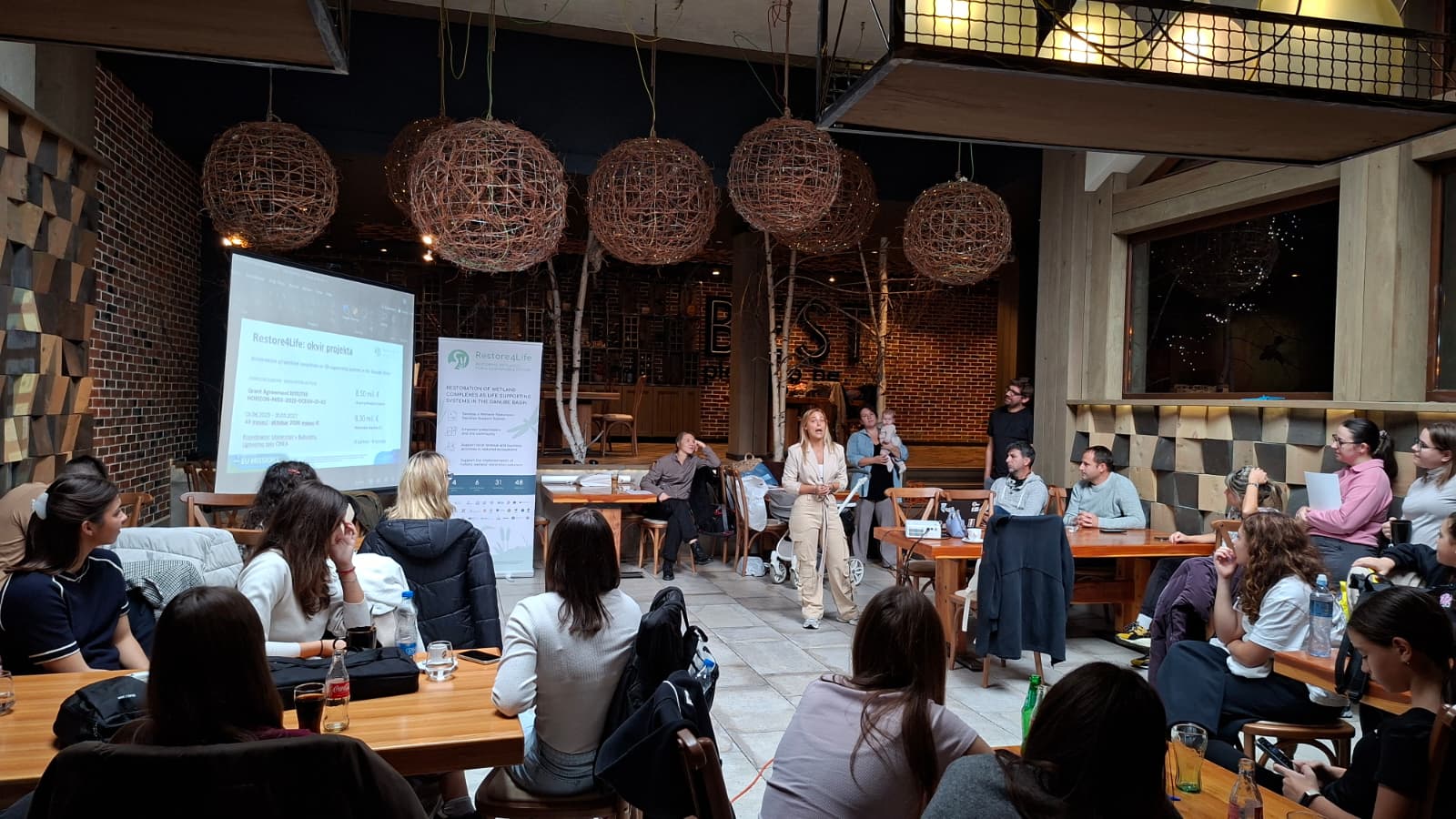
Organised and delivered by the University of Niš – Faculty of Sciences and Mathematics (FSM), with coordination and support from FVB-IGB (Leibniz Institute of Freshwater Ecology and Inland Fisheries) and local participating schools, the workshop welcomed 55 participants to Hotel Best, Vlasina Rid, and the surrounding wetland restoration site.
Three Parallel Programmes, One Shared Goal To make wetland learning genuinely practical and relevant for different age groups, the workshop ran three parallel programmes tailored to:
Primary school pupils
Secondary school pupils
University biology and ecology students training as future educators, alongside school teachers, a school pedagogue, and university staff.
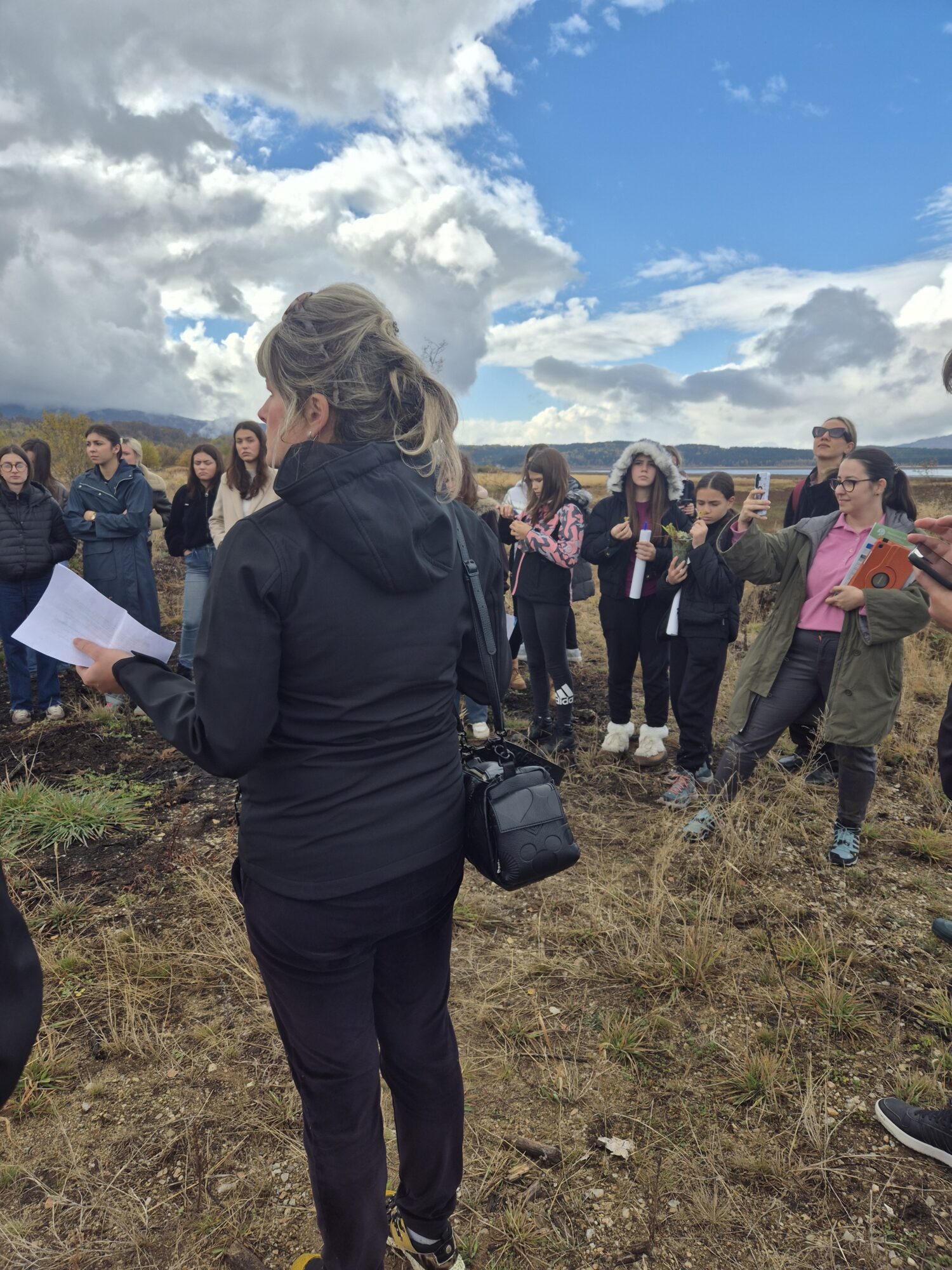
Rather than relying solely on classroom theory, participants stepped straight onto the Vlasina landscape to connect scientific concepts with an active restoration site. Through field observations, historic and ecological mapping, soil probing, water clarity measurements with Secchi disks, and hands-on bottle-filtration experiments, students saw first-hand how wetlands purify water, support biodiversity, and regulate our climate.
Testing Restore4Life’s Educational and Citizen Science Tools A central aim of the Vlasina workshops was to put Restore4Life’s digital and educational toolkit to the test in a real-world learning environment. Throughout the day, participants explored and evaluated:
The Living Floodplains Toolbox and custom educational cards, sparking interactive discussions around wetland habitats.
The Wetland4Life Citizen Science App, showing how everyday citizens and students can map wetlands, monitor water levels, and track environmental pressures like plastic pollution.
The Blue-Green Space4all game, turning complex ecosystem dynamics into engaging group challenges.